
TL;DR
- FIFA World Cup 2026 is the largest live streaming test the industry has ever faced: 104 matches across 39 days, projected at 6 billion total engagements globally, streamed across 212 territories on more platforms and at higher quality levels than any tournament before it.
- A goal in a knockout match is a near-instantaneous traffic event across tens of millions of concurrent sessions simultaneously. The streaming infrastructure holding that together has to work invisibly and without degradation for the entire duration.
- This post breaks down what that requires, from LL-HLS and LL-DASH delivery and multiview at scale, to SGAI ad insertion, AI-driven anomaly detection, and session-level observability that tells operations teams what is wrong before viewers do.
Table of Contents
When a goal goes in during a World Cup knockout match, tens of millions of people react in the same instant. In 2026, that moment happens across 104 matches, in three countries, for a projected 6 billion engagements worldwide, building on a 2022 tournament that drew 1.5 billion viewers for the Argentina vs. France final alone. It is the largest live media event ever attempted, and the most demanding test the streaming industry has faced.
Pulling off a tournament of this scale takes a lot of moving parts, especially around live and VOD encoding, delivering consistent playback across every device and market, monitoring quality in real time, and handling monetization under live football (or soccer, as games will be in the US) conditions. It will also give us a clear look at newer workflows becoming the standard, like server-guided ad insertion (SGAI) and new digital ad formats, all while AI works its way into nearly every layer of the stack. And with this many matches, often several at once, multiview moves from novelty to near necessity.
Along with other vendors, Bitmovin will be supporting broadcasters and platforms across the globe, and in this blog, I’ll go into some of the key factors of what this event actually looks like when 104 matches go live.
FIFA President Infantino described this as ‘104 Super Bowls in one month.’ For the streaming industry, that is an engineering brief.
World Cup 2026 Streaming Rights: A Global Patchwork
World Cup 2026 will be streamed across 212 territories, on more platforms and at higher quality levels than any tournament before it. From public broadcasters and free-to-air networks to subscription platforms and creator-led streaming, here is a snapshot of how some of the world’s key markets are delivering it:
- UK and Germany: Free-to-air on BBC/ITV and ARD/ZDF, with full streaming via iPlayer and ITVX
- Brazil: CazéTV streams all 104 matches free on YouTube in 4K, better quality than most European public broadcasters
- US: Fox holds English rights; the majority of matches require a subscription, in a host nation where Fox projects 15 million viewers per US game
- MENA: beIN Sports across 24 countries via beIN CONNECT
- China: 4K and 8K via CCTV, Migu, and Xiaohongshu following CMG’s confirmed deal in May 2026
- Sub-Saharan Africa: A record 10 nations qualified, split across New World TV, SuperSport, and free-to-air sub-licenses
Live Streaming Infrastructure: When a Goal Is a Traffic Event
Analysts estimate the final could account for 7% of total global internet traffic during the match. Well-prepared broadcasters have spent years building for exactly this kind of demand. The shape of the challenge is unique: a goal in a knockout match creates a near-instantaneous traffic spike across millions of concurrent sessions simultaneously. Origin shields, manifest delivery, and CDN routing all have to respond at scale in the same moment. With up to six group stage matches running at once, the best streaming operations are built to sustain overlapping peaks across different geographies, time zones, and CDN regions for 39 consecutive days without degradation.
Latency is the metric viewers feel most directly. When a neighbor cheers four seconds before a goal appears on your screen, the stream has failed. LL-HLS and LL-DASH have matured significantly as protocols, and broadcasters investing in precise CDN configuration and well-tuned ABR ladder decisions are now able to deliver genuinely low-latency experiences at this scale. Media over QUIC (MoQ) is an emerging protocol that could push latency boundaries further in future tournaments, but the current protocols, properly implemented, are what will deliver World Cup 2026.
Device Support and Multiview: Every Screen, Every Market
The device matrix broadcasters need to serve in 2026 is wider than any previous tournament, and consistent playback quality across all of it requires adaptive streaming that handles codec variation, network changes, and startup performance under load without compromise.
Key platforms include:
- Smart TVs: Samsung, LG, Hisense, VIZIO, HbbTV
- Set-top boxes and TV suppliers: Sky, Xfinity X1, Foxtel, Astro, RDK
- CTVs, headsets, and game consoles: Roku, Amazon Fire TV, Apple TV, Android TV, Xbox, PS5, Apple Vision Pro, TiVo
- Mobile and tablet: iOS and Android
- Browsers: Chrome, Safari, Firefox, Edge, Opera
Social media and web pages are increasingly where fans first encounter World Cup moments. Clips on news sites and highlights shared on Tik Tok demand fast, lightweight playback that loads instantly. This is where a player like Bitmovin’s Player Web X comes into play, ensuring those moments perform as well outside a broadcaster’s app as they do inside it.
Beyond single-screen delivery, World Cup 2026 is the tournament where multiview moves from ambition to expectation. With up to six matches running simultaneously during the group stage, fans no longer have to choose which game to follow. Each simultaneous feed requires its own encode, the player has to render multiple streams in sync, and bandwidth requirements scale accordingly. Bitmovin’s Player handles all of it, across every device on the list above.

Device types and platforms Bitmovin’s Player covers
How AI Is Changing Live Sports Streaming in 2026
AI is no longer a future consideration for live sports streaming. At World Cup 2026, it is already embedded across the production, delivery, and operations workflow in ways that are changing what broadcasters can do and how fast they can do it:
- Encoding optimization: AI-driven per-scene analysis allocates bits where they matter most, delivering better quality at lower bitrates. Core to how Bitmovin’s VOD Encoder and soon to be deployed for the Live Encoder, approach optimization.
- AI-generated highlights: Systems identify goals and key moments in near real time, with clip packages ready before the post-match show ends. For 104 matches over 39 days, that is a structural shift in what a small production team can deliver.
- Multilingual commentary: Either the most important access breakthrough in live sports broadcasting in a decade, or the first major AI PR disaster in sports media. Probably both, at different broadcasters, during this tournament.
- Anomaly detection: AI correlating degradation patterns across millions of concurrent streams with specific CDN edges, ISPs, or device types, before social media tells you something is wrong.
- Natural language analytics: Operations teams are deploying AI assistants that answer questions like ‘why is rebuffering spiking for mobile users in Portugal right now’ in seconds, rather than navigating dashboards under pressure.
Ad Monetization and Live Streaming: Record CPMs, Unsolved Problems
WARC estimates World Cup 2026 could inject $10.5 billion into the global advertising market. For streaming platforms, this is the highest-value live inventory that exists.
Non-interruptive formats have been a fixture of live sports broadcasting for years, and streaming is now bringing them to programmatic, addressable scale. The formats in play at World Cup 2026 include:
- L-shaped overlays and squeeze-backs: established in linear broadcast, now addressable in streaming
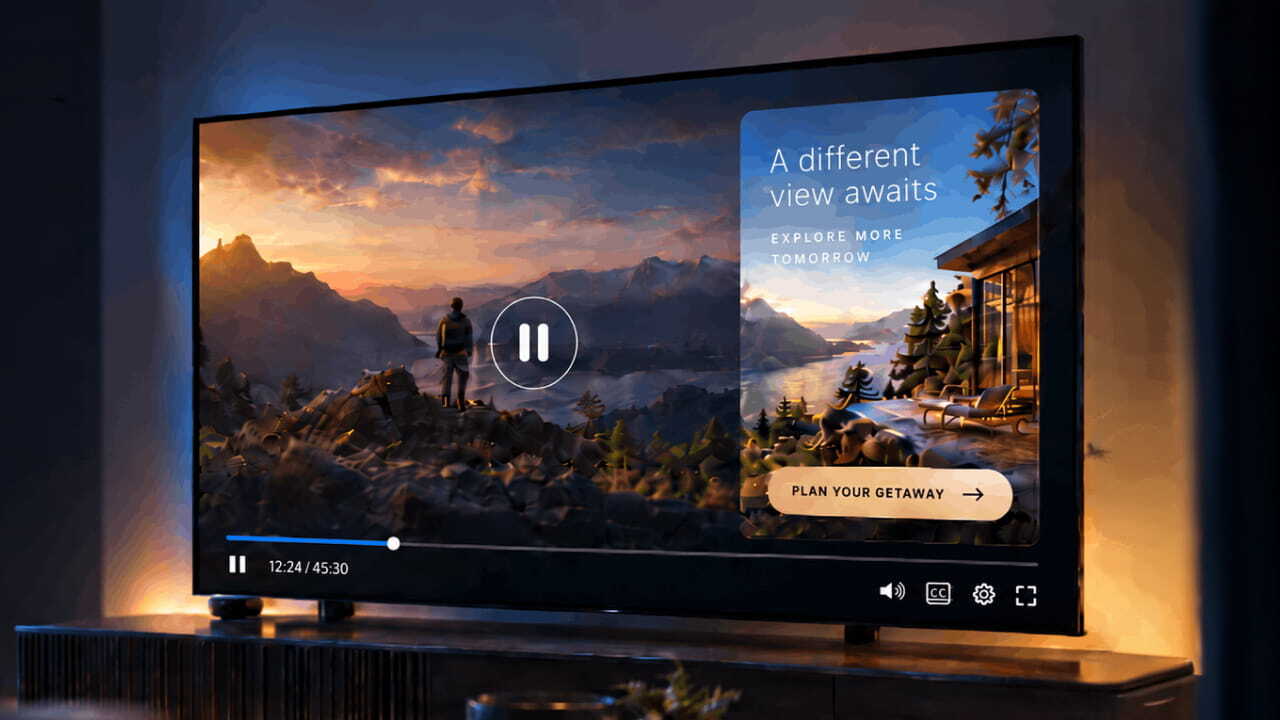
- Pause ads: streaming-native, triggered when a viewer pauses, non-intrusive by design
- Lower thirds and corner overlays: lightweight brand presence without interrupting the action
- Pre-roll and mid-roll: traditional break-based inventory, still the majority of ad revenue
For ad breaks, broadcasters run SSAI, CSAI, and increasingly SGAI workflows. SGAI handles the unpredictability of live sport that client-side timing struggles with, giving broadcasters server-side control over placement across DVR windows and regional compliance requirements. Public broadcasters in Europe streaming the full tournament are already deploying it for exactly this reason.
Across all of these workflows, real-time visibility into ad delivery alongside stream quality data matters as much as the insertion method itself, enabling streaming platforms to keep quality high while protecting CPMs. Bitmovin’s Advertising Observability covers this natively, with observability data fed into playback sessions in sub-5 seconds from Bitmovin’s Player.
Real-Time Video Observability: Knowing Before Viewers Tell You
At this scale, the broadcasters who stand out are the ones with real-time visibility into every layer of their delivery stack. Session-level quality of experience data across every device, CDN, ISP, and geography is what separates a reactive operation from a proactive one.
Real-time analytics gives operations teams the ability to identify and resolve issues while the match is still live, not after the 90 minutes are up. Bitmovin’s Observability solution for video playback gives teams the ability to distinguish in real time between a CDN edge issue, an adaptive streaming misconfiguration, a DRM delivery failure, or a device-specific rendering fault, and act on it immediately. During a tournament where every match matters, that operational clarity is a genuine advantage.Beyond stream quality, Bitmovin’s Advertising Observability gives broadcasters real-time visibility into SGAI, CSAI, and SSAI ad delivery alongside stream quality data, with observability data fed into playback sessions in sub-5 seconds.
The Stakes for the Streaming Industry
Qatar 2022 proved streaming could handle global simultaneous demand. 2026 is the test of whether it can do it reliably, across every market, every device, and every concurrent peak at once. The broadcasters and platforms delivering this tournament span free-to-air public broadcasters in Europe and Oceania, global sports streaming platforms, and pay-TV operators across MENA and Sub-Saharan Africa. The infrastructure holding that together, from playback and live encoding to real-time quality monitoring, has to work invisibly across all of it simultaneously.
That is exactly what Bitmovin’s Player, Live Encoder, and Observability solution for video playback are built for. 104 matches is a long time to hide a weak infrastructure.
FAQs
How many matches are being streamed at the FIFA World Cup 2026?
FIFA World Cup 2026 features 104 matches played over 39 days across three host nations: the United States, Canada, and Mexico. The tournament expanded from 32 to 48 teams, producing significantly more matches than the 64 played at Qatar 2022. With up to six group stage matches running simultaneously, streaming platforms must sustain overlapping concurrent peaks across different geographies, time zones, and CDN regions for the full duration of the tournament.
How many people are expected to watch the FIFA World Cup 2026 streaming?
The 2026 tournament is projected to generate approximately 6 billion total engagements globally. For context, the Argentina vs. France final at Qatar 2022 alone drew 1.5 billion viewers. For the US market specifically, Fox projects 15 million viewers per US game, reflecting the tournament’s host-nation status and its first appearance across North America. Analysts estimate the final could account for 7% of total global internet traffic during the match.
What are the biggest technical challenges for World Cup 2026 live streaming?
The core challenge is simultaneous scale across all dimensions at once: concurrent peaks across multiple matches, globally distributed viewers on every device class, overlapping CDN regions, and near-zero tolerance for degradation across 39 consecutive days. Beyond traffic handling, broadcasters must maintain low latency so viewers are not spoiled by neighbors or social media before the action appears on screen, deliver consistent adaptive playback across a device matrix spanning smart TVs, set-top boxes, mobile, console, and web, and do all of this while managing ad insertion across complex live inventory.
What is multiview streaming?
Multiview streaming allows viewers to watch multiple live feeds simultaneously within a single player interface. At World Cup 2026, with up to six group stage matches running at the same time, multiview moves from a novelty feature to a near-necessity for platforms that want to keep viewers engaged across concurrent fixtures. Each simultaneous feed requires its own encode, the player must render multiple streams in sync, and bandwidth requirements scale accordingly.