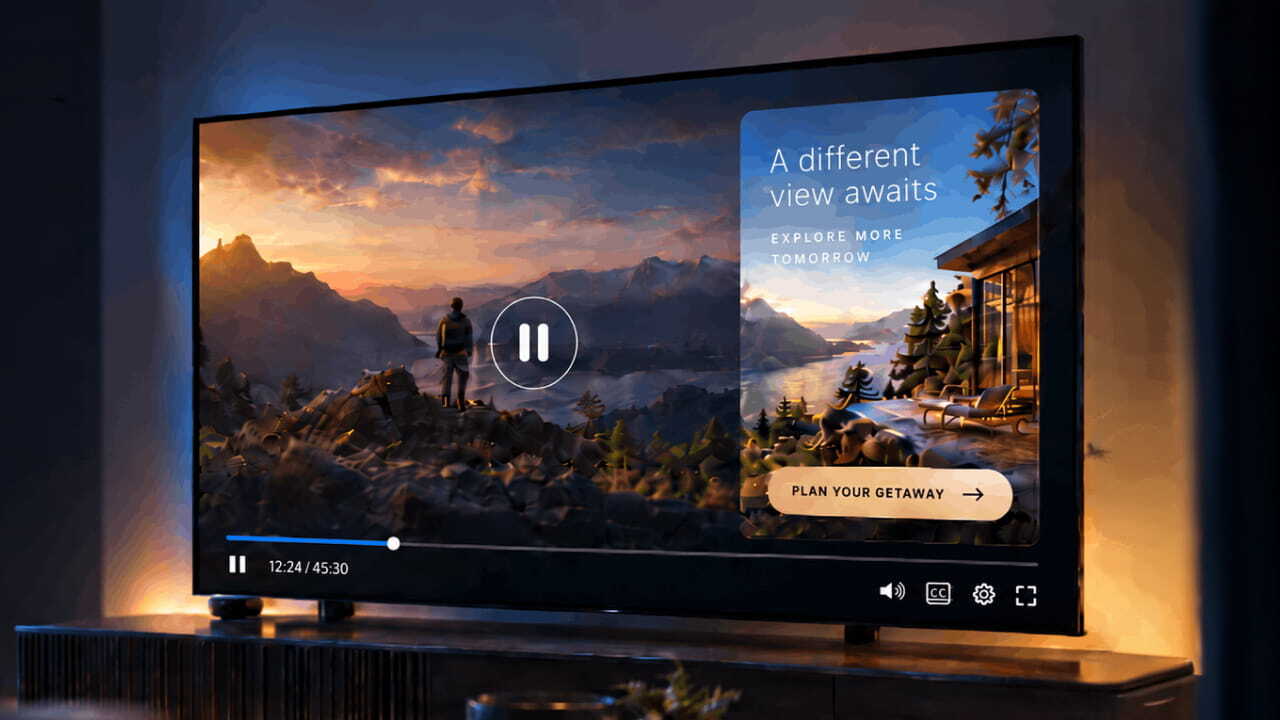
Every time a viewer presses pause, they create an ad slot that didn’t exist a moment before. Pause ads fill that slot with a sponsored message, shown only while playback is stopped and dismissed when the viewer resumes, so no content is interrupted and the ad has the screen to itself whenever the viewer looks back. The format has moved quickly from experiment to deployment. Hulu, Peacock, HBO Max, Netflix, Prime Video, YouTube and Disney+ all run pause ads today, and the Interactive Advertising Bureau (IAB) Tech Lab finalized standardized signaling for the format in July 2026. Player-side and ad-serving technology are largely ready, while how the format is bought, from consistent creative specifications to bidstream signaling and programmatic support, is still maturing.
In this blog, we’ll go into where the industry stands, why pause ads matter for ad sales teams, the state of pause ad technology, and how Bitmovin’s Player supports pause ads across connected TV (CTV), web, Android and Apple devices with one integration rather than a separate build for each platform. We’ll close with what’s next for the format.
Where the Industry Stands
Disney has made the format a headline product in its advertising portfolio, and agencies and brands are becoming more familiar with it. Streaming services that offer pause ads now are positioned to capture demand as adoption grows and even in Bitmovin’s 2026 Video Developer Report, 45% of respondents said they already use pause ads.
For example, a streaming service generating 3 million eligible pause events per month, a volume we see in our own playback data, could earn around $180,000 in gross revenue a year. That assumes a 50% fill rate (the share of pause events where an ad is actually served) and a $10 cost per thousand impressions (CPM), in line with what many buyers expect to pay according to a recent Index Exchange survey. That revenue potential helps explain why many of the streaming services we speak with are either building or evaluating pause ads.
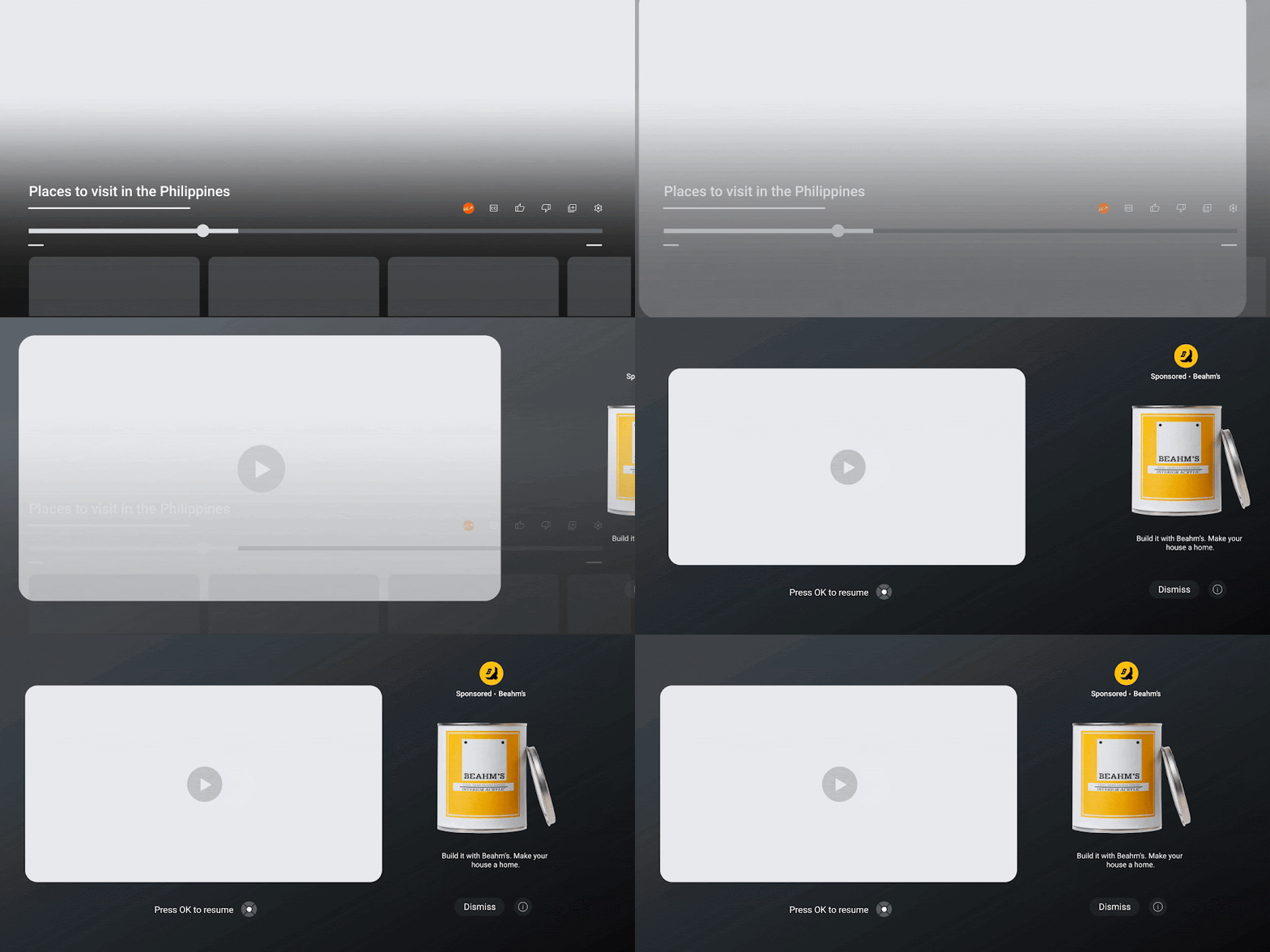
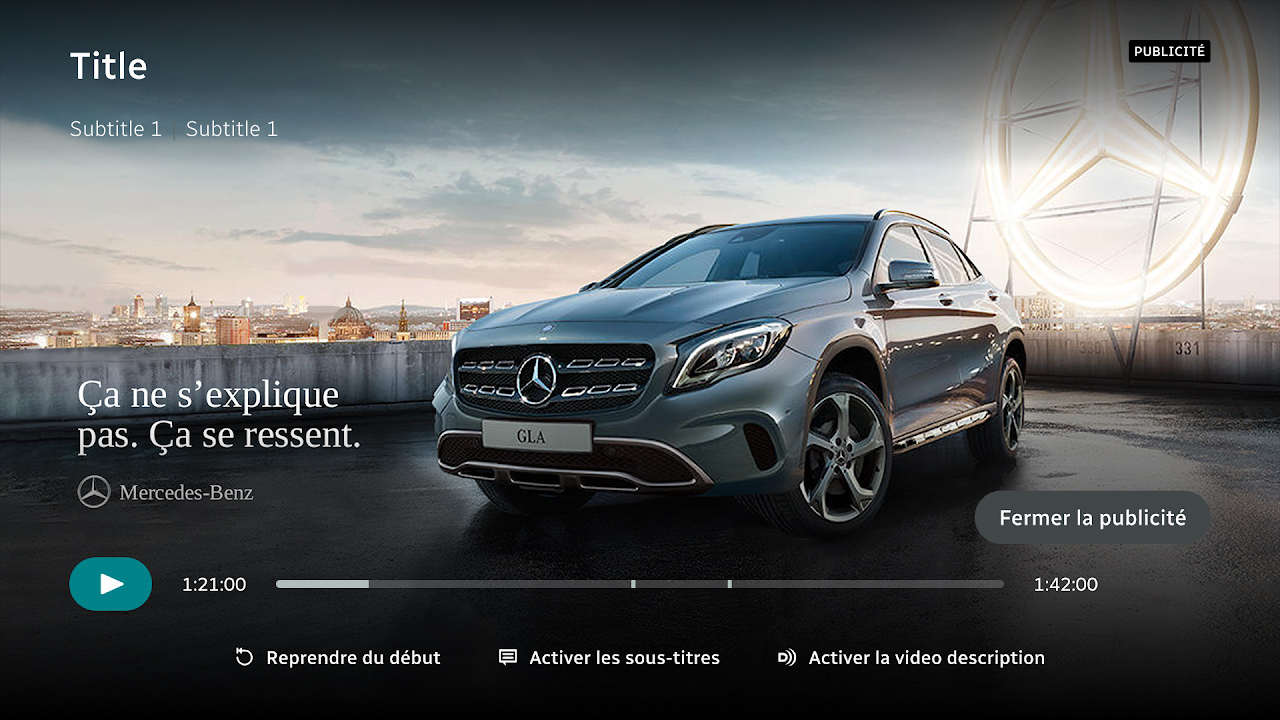
Two examples show how differently services can present the format:
YouTube pause ads: https://support.google.com/google-ads/answer/16131620?hl=en
CBC/Radio-Canada pause ads: https://solutionsmedia.cbcrc.ca/en/offers/creative-formats/pause-ads
The trajectory is clear: pause ads are on their way to becoming a standard monetization surface across ad-supported streaming services, in the same way pre-rolls and mid-rolls are today.
Why Pause Ads Matter for Ad Sales Teams
For ad sales teams, the format works for publishers, viewers and advertisers at the same time:
Creating new inventory. Pause ads enable monetization of playback moments that are otherwise unmonetized. Viewers often pause TV shows and movies to check a notification on their phone, grab a drink or a snack, or step away for a moment. Those moments can be sold without adding to the streaming session’s ad load. For services under pressure to grow ad revenue without degrading the viewer experience, the format meets that need.
Viewers stay in control. Because the ad appears when the viewer chooses to pause and disappears when they resume, pause ads are less interruptive than ad formats that stop or replace active playback.
Advertisers get a high-attention format. A paused screen has no competing video content. In early beta campaigns in 2019, Hulu reported a 68% brand lift. On pricing, buyers and sellers are still finding the level: many buyers expect sub-$15 CPMs while publishers value the format at $15–25 or above, which reflects a young format where market pricing is still being established.
The State of Pause Ad Technology
Until recently there was no standard way to signal pause ads. Early adopters each built their own implementation: some call the ad server at the moment of pause, some prefetch creatives using in-manifest signaling, and vendors have used everything from Video Ad Serving Template (VAST) to Secure Interactive Media Interface Definition (SIMID) to fully proprietary schemes. The video streaming industry is now resolving this through common standards.
Standardization has arrived. In December 2025 the IAB Tech Lab published its CTV Ad Portfolio for public comment, defining six CTV formats: Pause, Menu, Screensaver, In-Scene, Squeezeback and Overlay, with Pause and Menu prioritized for OpenRTB programmatic support. The guidance was finalized in July 2026. In parallel, the draft VAST 4.4 schema gives the NonLinearAds element its first major overhaul since 2008: pause ads are signaled as non-linear creatives, and the update adds media files for video and cinemagraph assets, a duration element for quartile tracking, and SIMID hooks for interactivity. In OpenRTB, pause inventory is signaled with placement type (plcmt) 5.
Buying intent is ahead of buying infrastructure. Publishers and their technology partners can deliver pause ads at scale today: the player-side and ad-server technologies are proven and static image creative helps to keep production simple. In contrast, the demand side is currently earlier in the curve. As DirecTV noted around the IAB standardization, advertisers have hesitated partly because each platform required custom creative. Common standards should reduce that creative fragmentation and make the format easier for agencies to buy across multiple streaming services. Platform owners are now actively working with brands and agencies to build a demand pipeline.
How Bitmovin’s Player Supports Pause Ads
We recently released pause ads support in Bitmovin’s Player across CTV, web, Android and Apple devices. The implementation follows the principles emerging across the industry: use the standards ad servers already support, work the same way on every screen, and let publishers choose how pause ads are signaled in their own workflow. Here’s how that works in practice:
- Standards-based messaging. We support VAST NonLinearAds tags to request pause ads, with static image creatives served from any VAST-compatible ad server. This matches how major ad servers, including FreeWheel and Google Ad Manager, deliver the format today, and it aligns with the IAB’s direction for CTV formats.
- One integration to reach every screen. The same approach works across CTV, browsers, Android and Apple devices. Publishers don’t need to build and maintain a per-platform implementation, which is what most early adopters had to do.
- Flexible API for signaling. Pause ads could be signaled to the app through multiple mechanisms, including server-side ad insertion (SSAI) metadata, app-level handling and HTTP Live Streaming (HLS) Interstitials. The Player API enables integrators to react to pause ad signals from any route while letting the player take care of the pause events, loading and displaying the ad creative. Setup steps and code samples are covered in the pause ads developer documentation.
We also work with partners across the delivery chain on pause ads. Simplestream has deployed pause ads in production with Bitmovin’s Player. Broadpeak’s BannersIn2 non-linear ads solution, which covers pause ads among other formats, works with Bitmovin’s Player through the pre-built SmartLib integration.
If you’re a publisher wanting to see it in action, try the pause ads demo on the Bitmovin dashboard, and our team can walk you through revenue sizing using your own audience’s pause behavior.
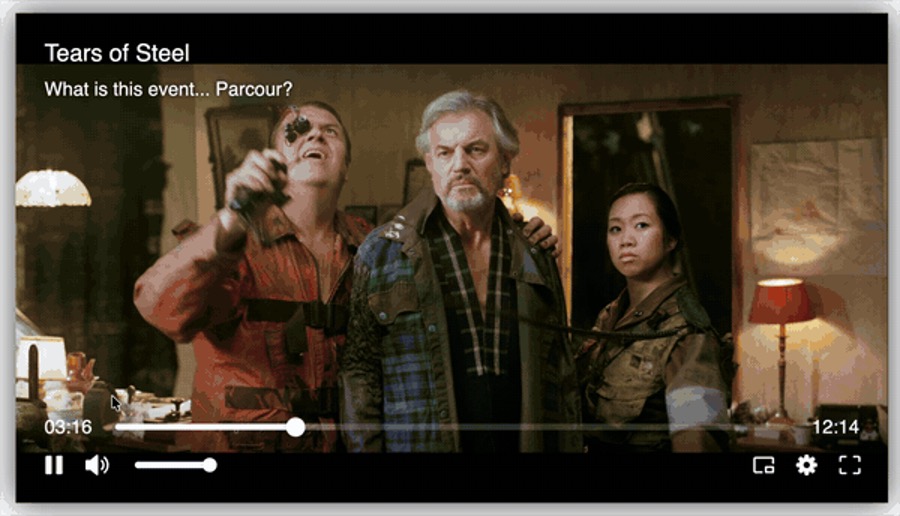
Pause ads in Bitmovin’s Player
What’s Next for Pause Ads
- Pause ads become easier to buy programmatically. As standardized signaling and OpenRTB support roll out, it should become easier for advertisers to build reusable pause creative and buy inventory across services through the same programmatic channels they use for other video formats. Less creative fragmentation lowers the barrier for advertisers and should bring more demand to the format.
- Measurement built in. Bitmovin’s Observability solution will soon measure pause frequency, pause ads served and viewer engagement alongside playback quality data.
- Richer creative. Most pause ads today are static images. VAST 4.4 explicitly opens the door to motion: cinemagraphs, short video loops and fully interactive SIMID creatives (think quizzes, polls and games). Expect the format to move beyond “sponsored wallpaper” toward creative that viewers can engage with.
- Contextual intelligence. Scene-level context could make pause ads more relevant to the content surrounding the pause moment. The scene metadata our AI Scene Analysis product generates could be used to match the creative to what was on screen when the viewer paused: for example, showing a travel ad after a beach scene or a pizza brand during a cooking show. That kind of contextual relevance can be achieved without relying on personal data, which is increasingly valuable in a privacy-constrained market.
- More non-linear formats will follow. Pause ads are among the first non-linear formats to reach mainstream deployment. Squeezeback ads, which shrink the content to make room for a creative, are standardized alongside pause ads in the IAB’s CTV Ad Portfolio. They apply the same logic to moments when the viewer hasn’t stopped watching, which makes them a natural fit for live events where viewers rarely pause.
- Shoppable moments. QR codes give viewers a direct path from a paused TV experience to a mobile destination, which makes pause ads a practical starting point for shoppable formats.
Want to explore what pause ads could be worth for your service? Get in touch, read our documentation or try the demo on your Bitmovin dashboard.